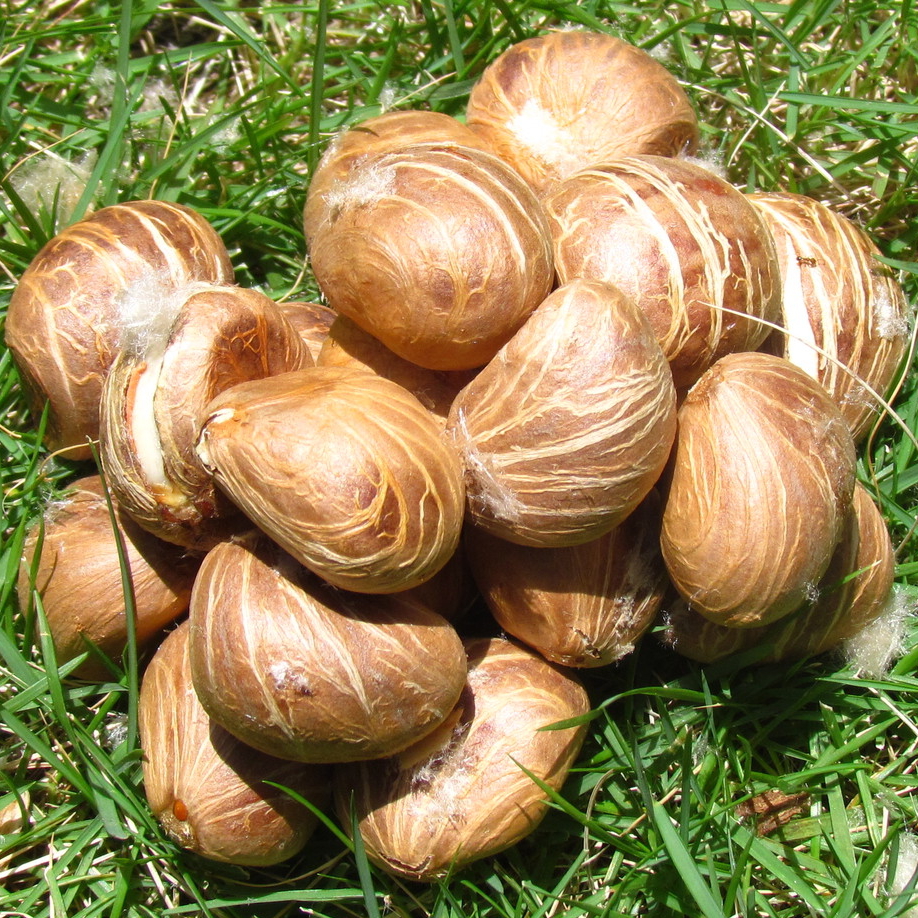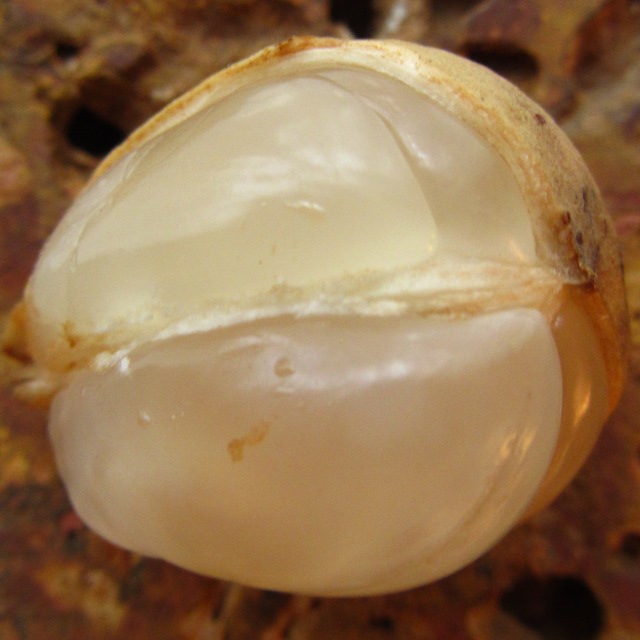
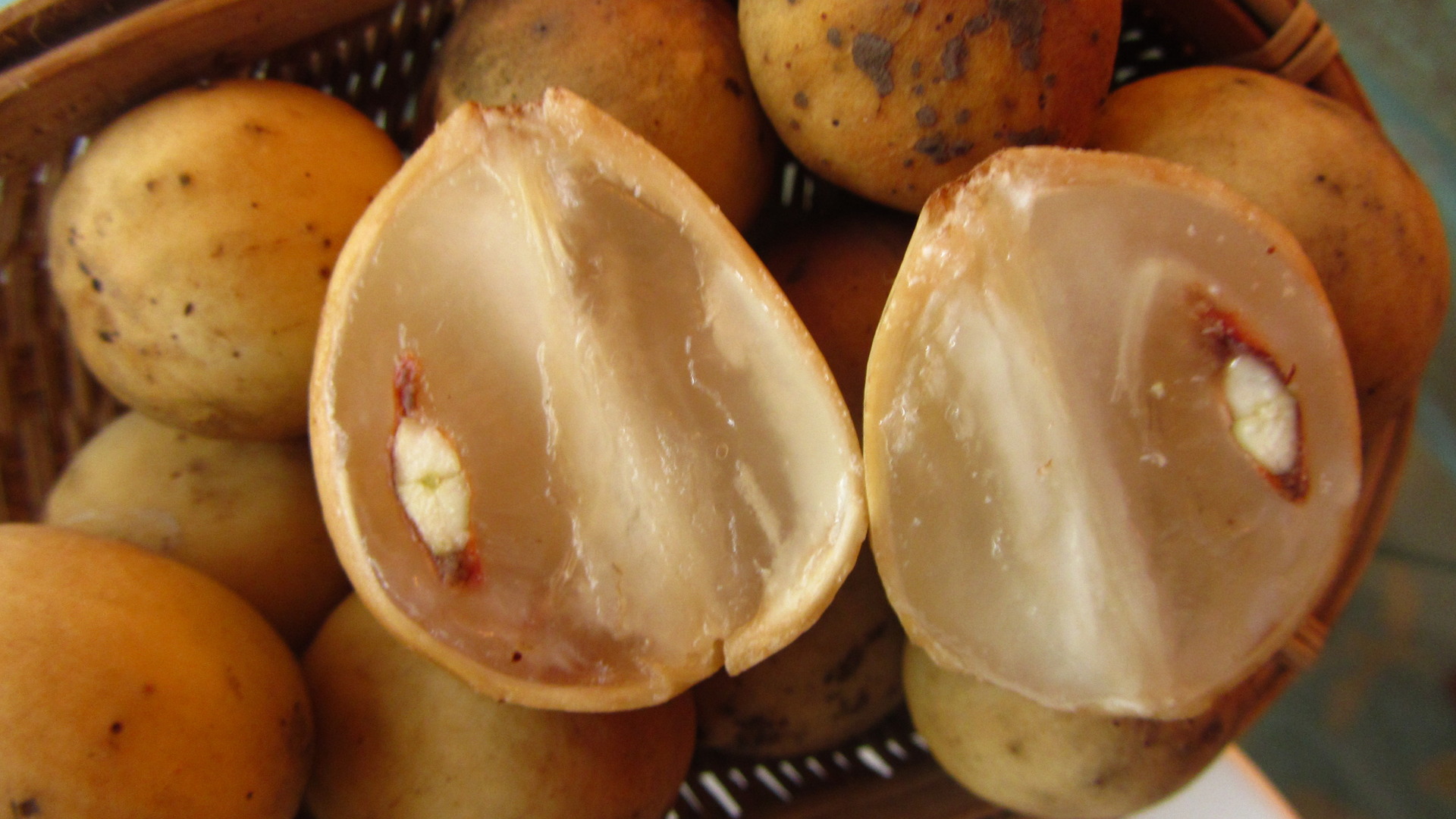
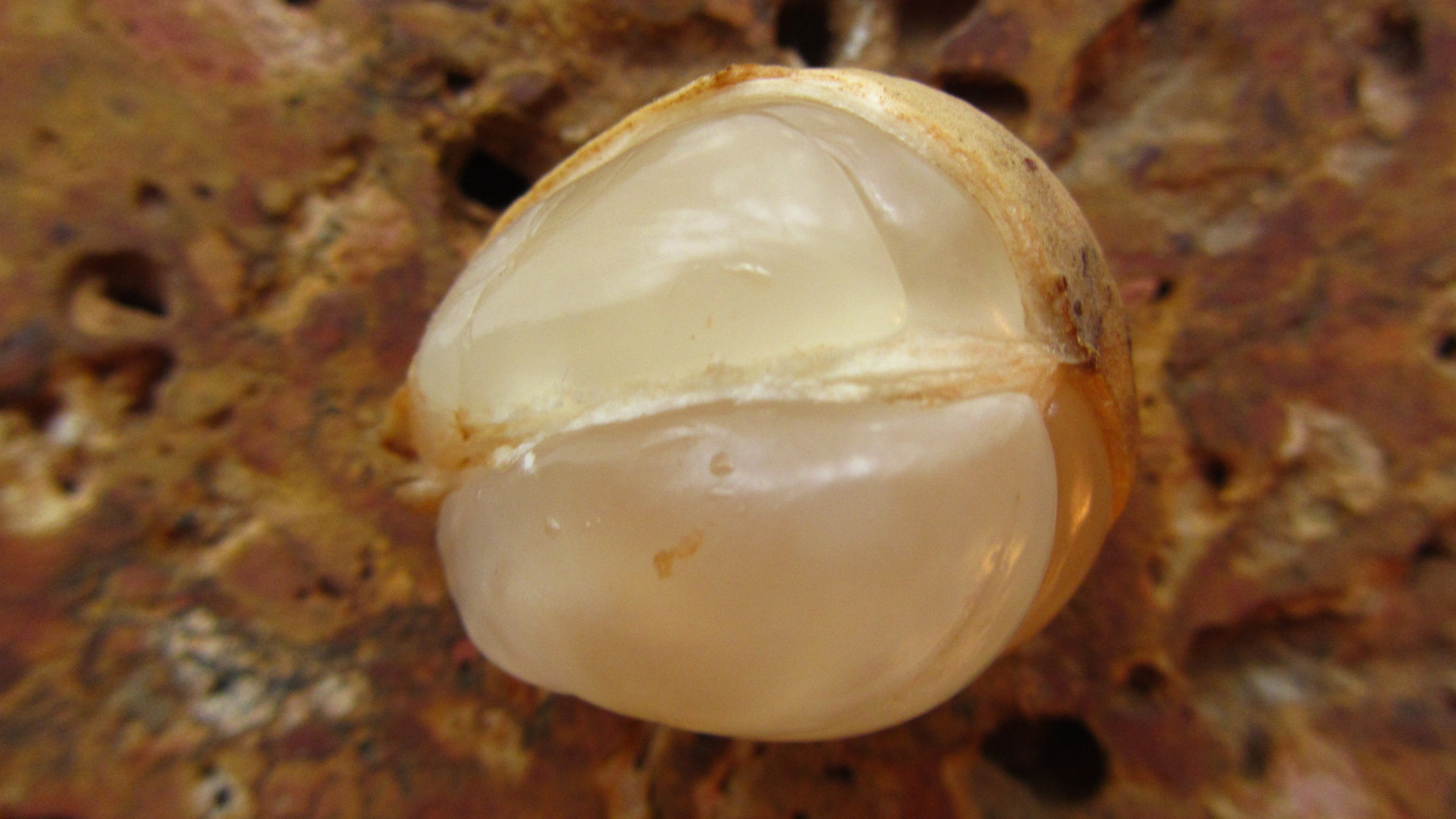
The tropical world is home to an incredible variety of unusual and tasty fruits, many of which are completely unknown outside of their natural location. One of them is langsat (Lansium domesticum), a delicious product of a tree from the Mahogany family that I discovered a couple of days ago here in Cambodia. At first sight the little fruits resemble small potatoes, but below the thin skin are white translucent segments that easily separate from each other. They might contain a seed or two, although I understand that the langsat produced by commercial farming is of cultivated variety with underdeveloped seeds or even no seeds at all.
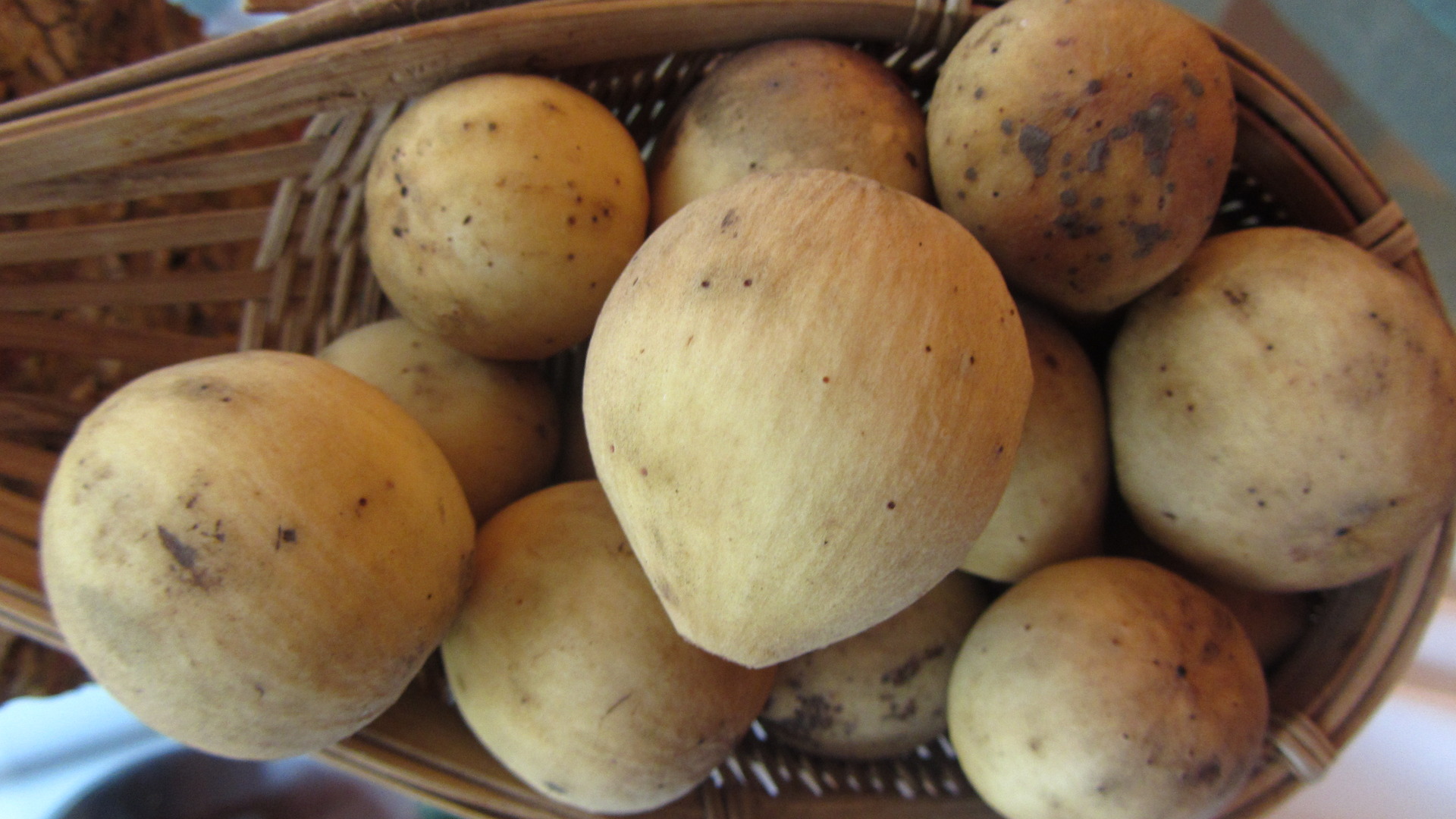
So what does langsat taste like? The fruit has apparently been likened to many other products, but if I had eaten it with my eyes closed, I would have probably thought I was having a mandarin orange. Slightly sour, yet smooth as a litchi on the surface, the little white segments tend to leave a very pleasant aftertaste in the mouth.
Besides Cambodia, langsat is farmed in many other parts of the continental south east Asia, as well as Philippines and Indonesia. I’ve never seen it in Taiwan.
(This page has been viewed 699 times.)