Leucocoprinus birnbaumii is a fairly common mushroom found in many tropical and subtropical regions, while in temperate climate it can grow indoors, alongside potted plants. Perhaps unsurprisingly, given that the English language is predominantly spoken in the climatically milder zones, it is sometimes called “plantpot dapperling”, “flowerpot parasol” or “yellow houseplant mushroom”, even though in most parts of the world it occurs outdoors. In Taiwan the mushroom is called 純黃白鬼傘, which can be literally translated as “pure white-yellow ghost umbrella”. It is mildly poisonous and it might cause severe stomach problems if consumed.
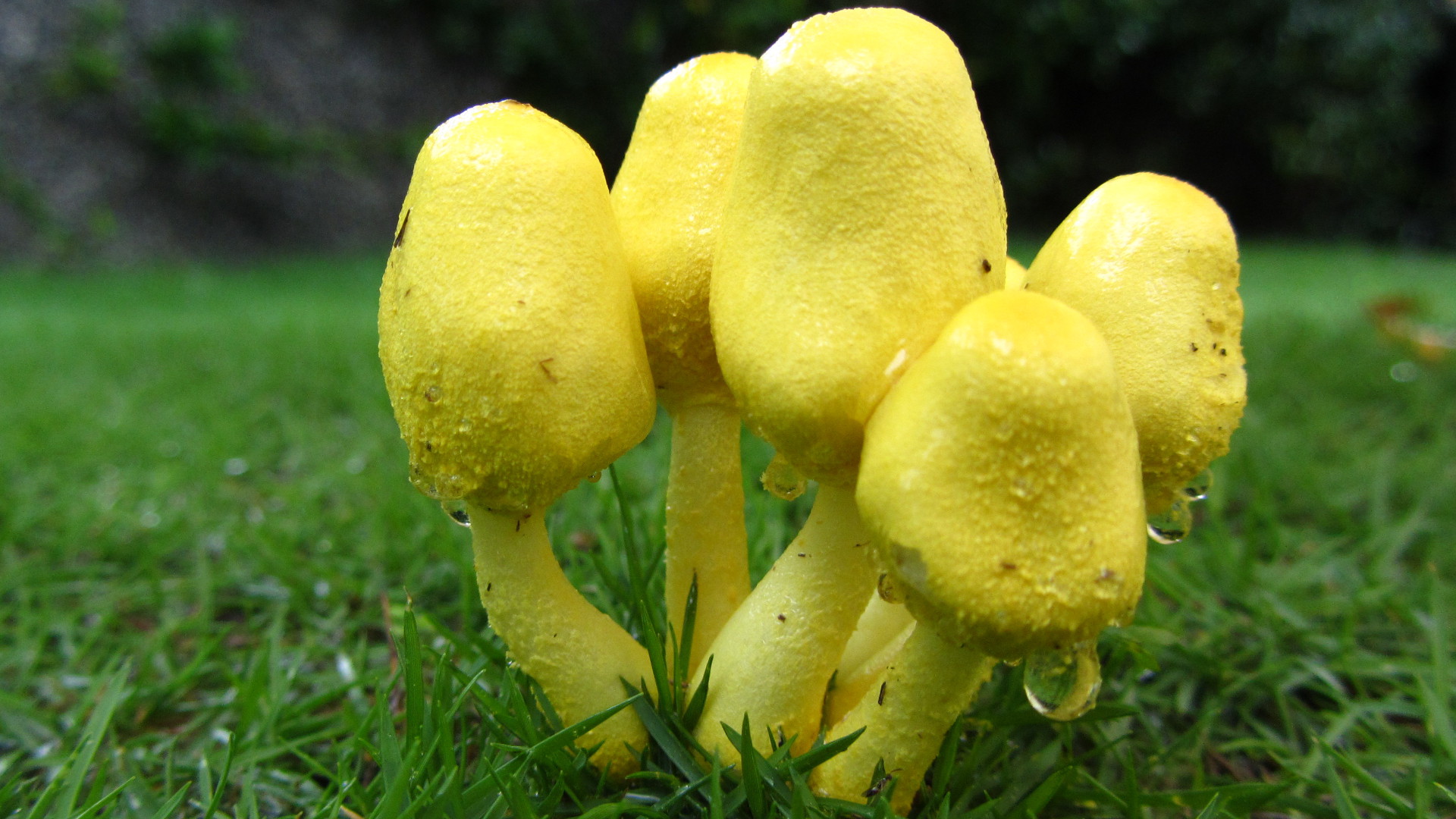
We usually get these fungi in the garden during the rainy season. They normally grow as solitary plants or as a cluster of plants with separate roots. The ones photographed below, however, appeared to be growing from the same root, creating a great-looking yellow family, right in the middle of our front yard! Placing the camera (and part of myself) under a large umbrela, I was able to take a picture of the plant’s texture, with the waterdrops adding an interesting dimension to the fungi. These are still quite young mushrooms with a strong colour, but they grow fast and the lovely yellow soon fades into a “bleached-out” beige. When that happens they no longer look so impressive.
(This page has been viewed 2144 times.)
They are growing in my pepper plant pot. Will they affect my peppers?
Evidently not: http://houseplantscare.blogspot.com/2010/09/yellow-houseplant-mushroom.html