Bad news – two of the baby bulbuls were lost yesterday afternoon. I don’t know if this was a case of the mother abandoning the two weakest individuals (I believe some birds to this in order to give the strongest ones a better chance to survive) or a result of predator activity. Given the fact that I found bits and pieces of the baby birds scattered on the lawn not too far from the nest, I am inclined to believe the latter. I had been especially concerned about a possible threat posed by the White-vented Myna (Acridotheres javanicus), a non-native myna species well-established in this area. These intelligent birds are omnivorous and larger than bulbuls, so it would be no problem for them to snatch a tiny baby bird from the nest and fly away with it.
I don’t want to interfere with nature too much, but it isn’t always easy to stay emotionally detached from the events after having observed a pair of birds build a nest, lay the eggs and give life to a new generation. It is indeed a rare experience and privilege to witness, from close range, a mother bird bringing food to the nest and placing it carefully into one of the gaping mouths. But will the chicks survive the perilous path to adulthood? Even though it takes these species just 16 days to fully wean, every minute of those days can bring danger – predators, sickness, extreme weather conditions… So in order to increase their chances of survival I have placed a few extra branches and a large palm leaf on top of the bushes above the nest; that’s to hide it from view and to make access to it more difficult for predators.
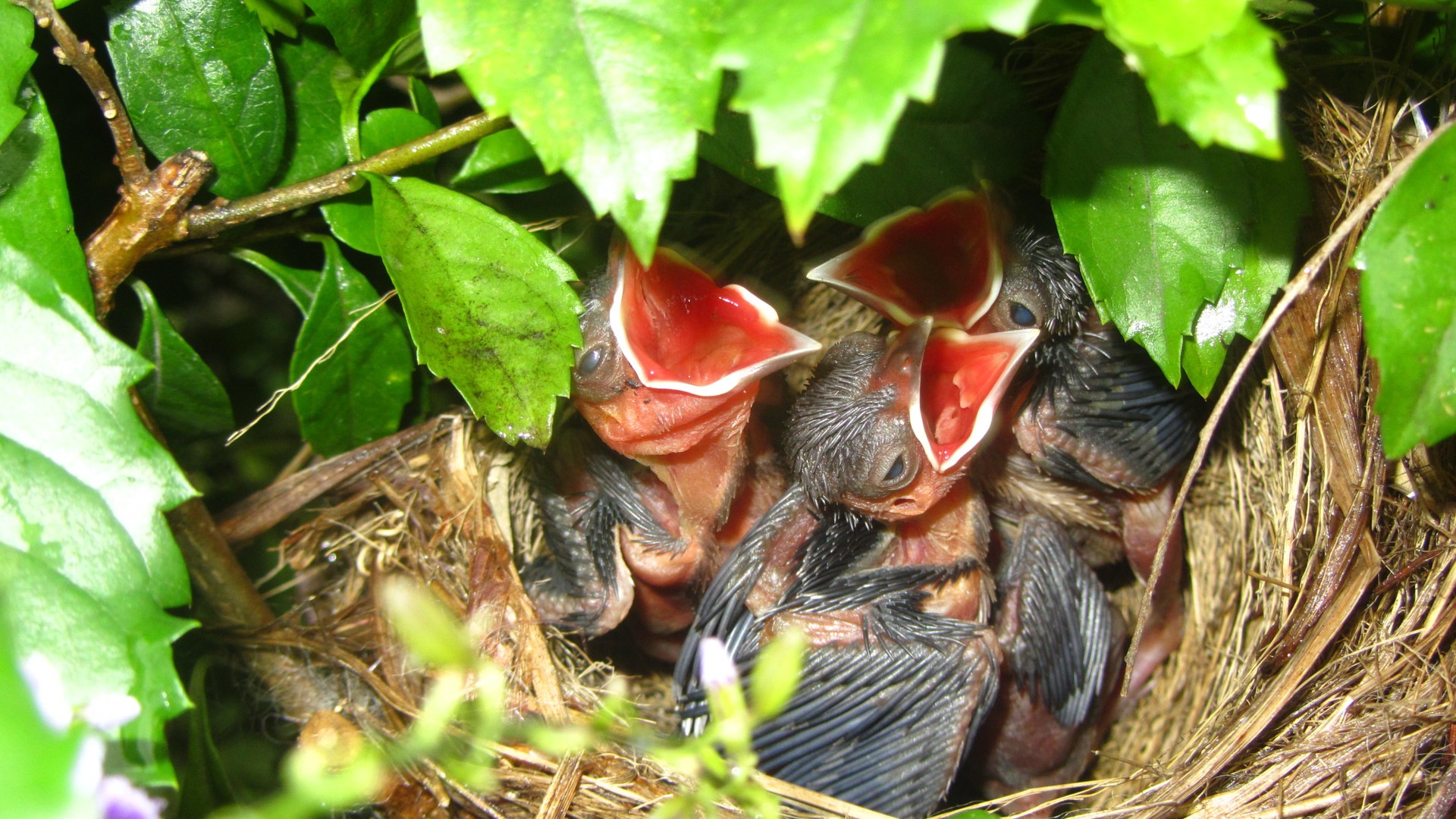
I took the photo (below) yesterday. It was day six since the baby bulbuls (Pycnonotus taivanus) hatched and it was the first day they opened their eyes. Also, they started emitting sounds for the first time and this could have also contributed to them being discovered by an opportunist predator.
(This page has been viewed 502 times.)