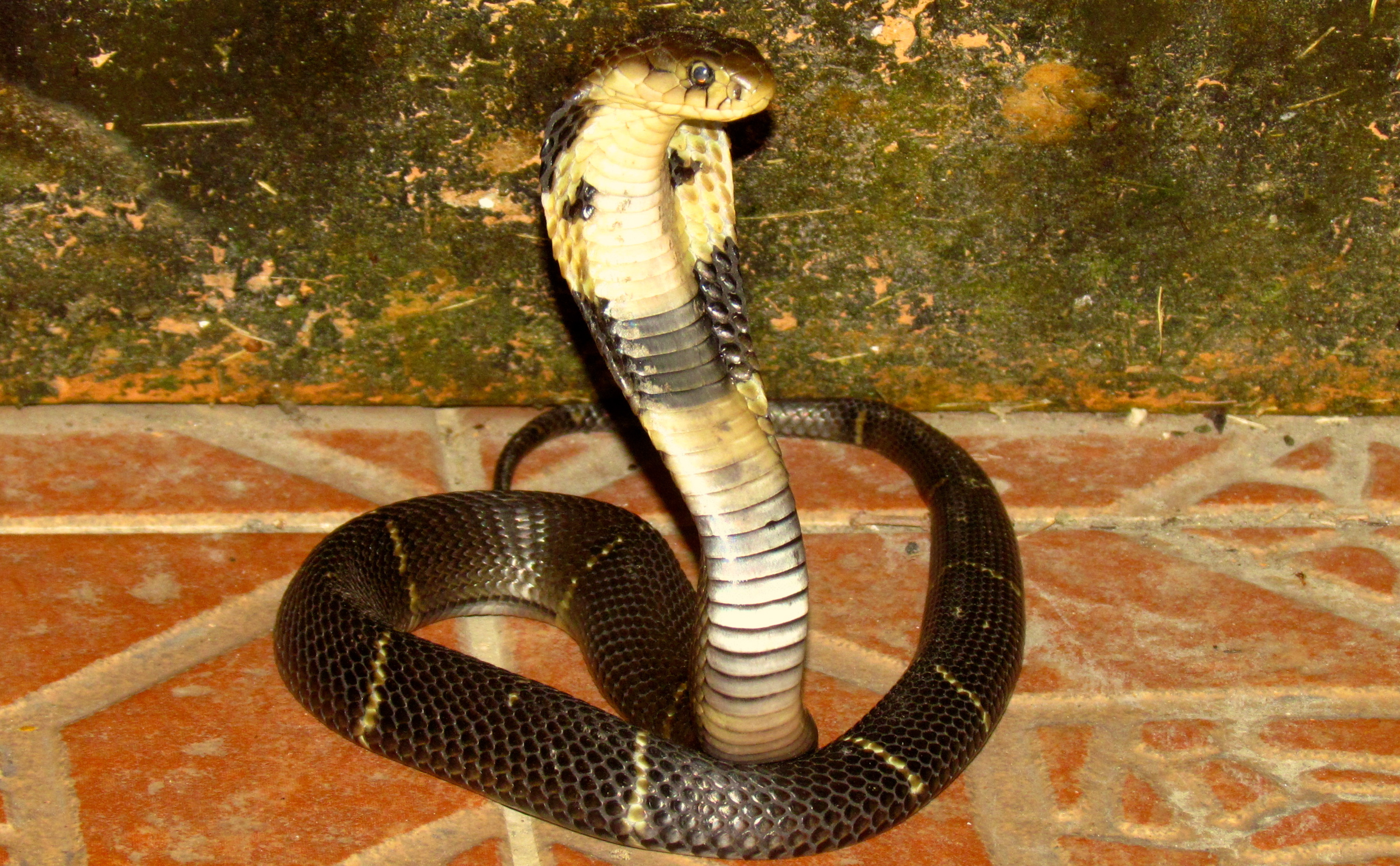
It’s the second time this year a Chinese cobra (Naja atra) has paid us a visit. The first time it happened I was mighty excited — and terribly scared — because it was making its way towards the aviary where I keep a handful of parrots. Although this was no King cobra, it was still deadly and I was worried. Eventually the snake did enter the aviary, although I only became aware of the fact four days later when I spotted it again – right next to the small refrigerator where I keep bird food. So for four days the cobra was hiding somewhere behind the fridge or the washing machine while we walked around – totally unaware that it’s still around! Since having a venomous snake in the house was a new experience for me, I called the firefighters who arrived promptly and caught the serpent, put it into a cage and took it away.
This time around I was better prepared. After the first cobra experience I bought a snake tong commonly available in shops around the town. Since by nature cobras assume a defensive pose whenever threatened, it was simple enough to catch the deadly visitor with the tool. I gripped it by the neck (which, as I learnt later, was a mistake, because this can cause great discomfort to the animal), but I tried to be gentle and held it lightly while I carried it about 200 metres from the house. The cobra did slip out at one point, but it was probably too distressed to use the opportunity and crawl away and I managed to grab it again. Then I released it into the nearby annona fields where it finally disappeared.
It was a smallish cobra, only about 60 centimetres long, probably still a baby. I have a friend who slaughters all venomous snakes he finds on his property with a metal bar, but I could never do that. Even though they are deadly, I find them fascinating and absolutely gorgeous. Besides, I was born in the Year of the Snake 🙂
(This page has been viewed 1695 times.)