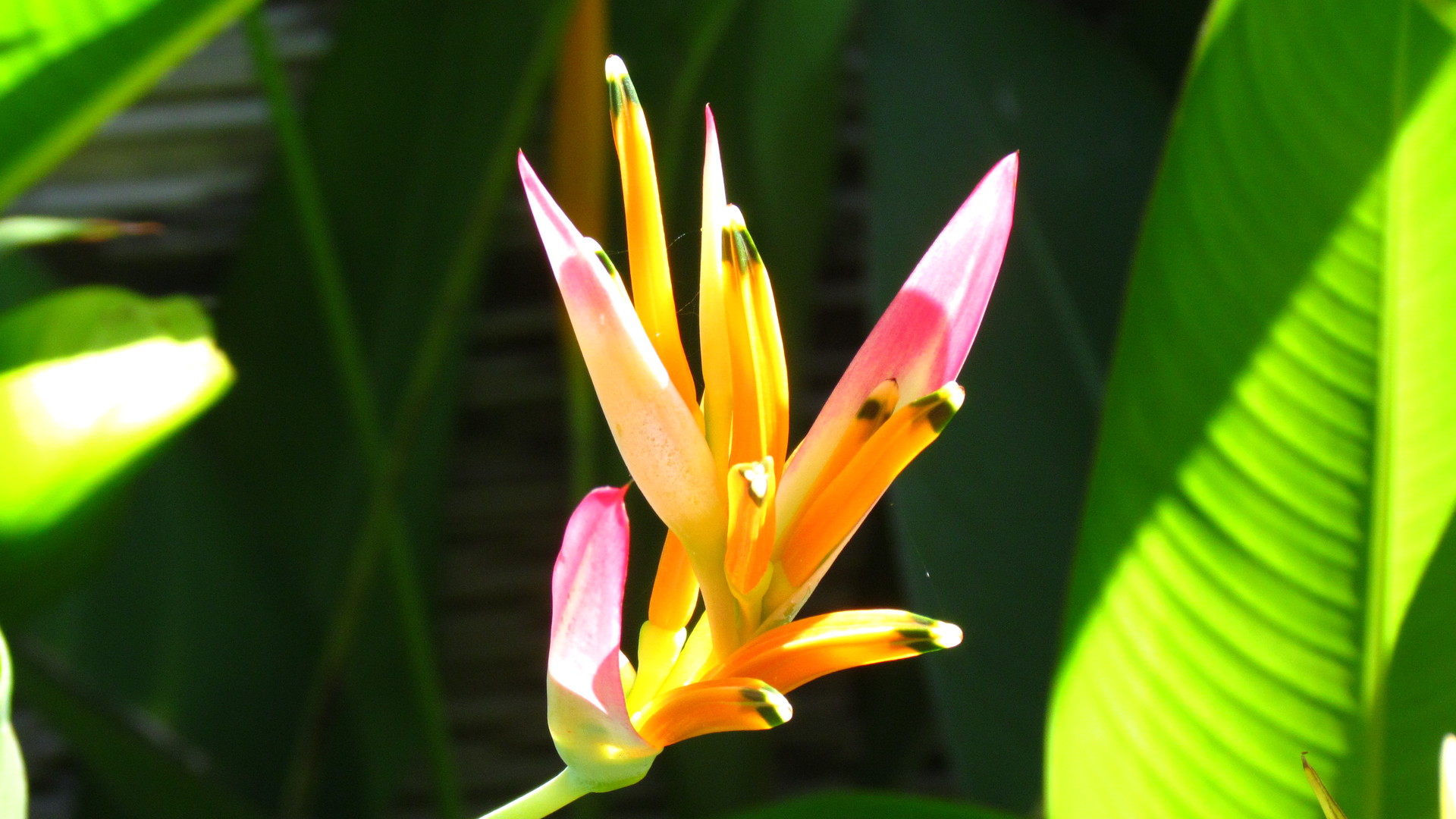
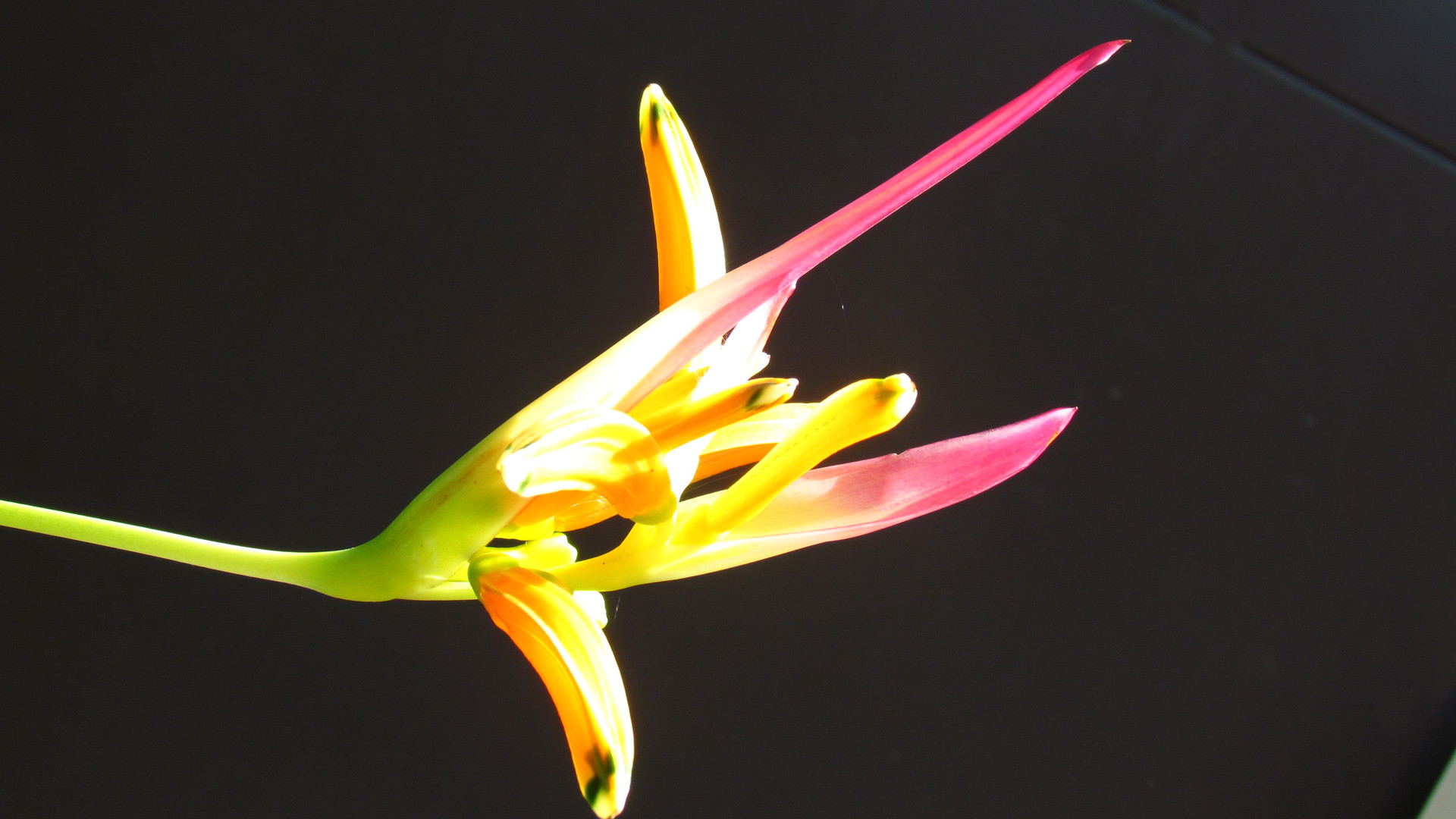
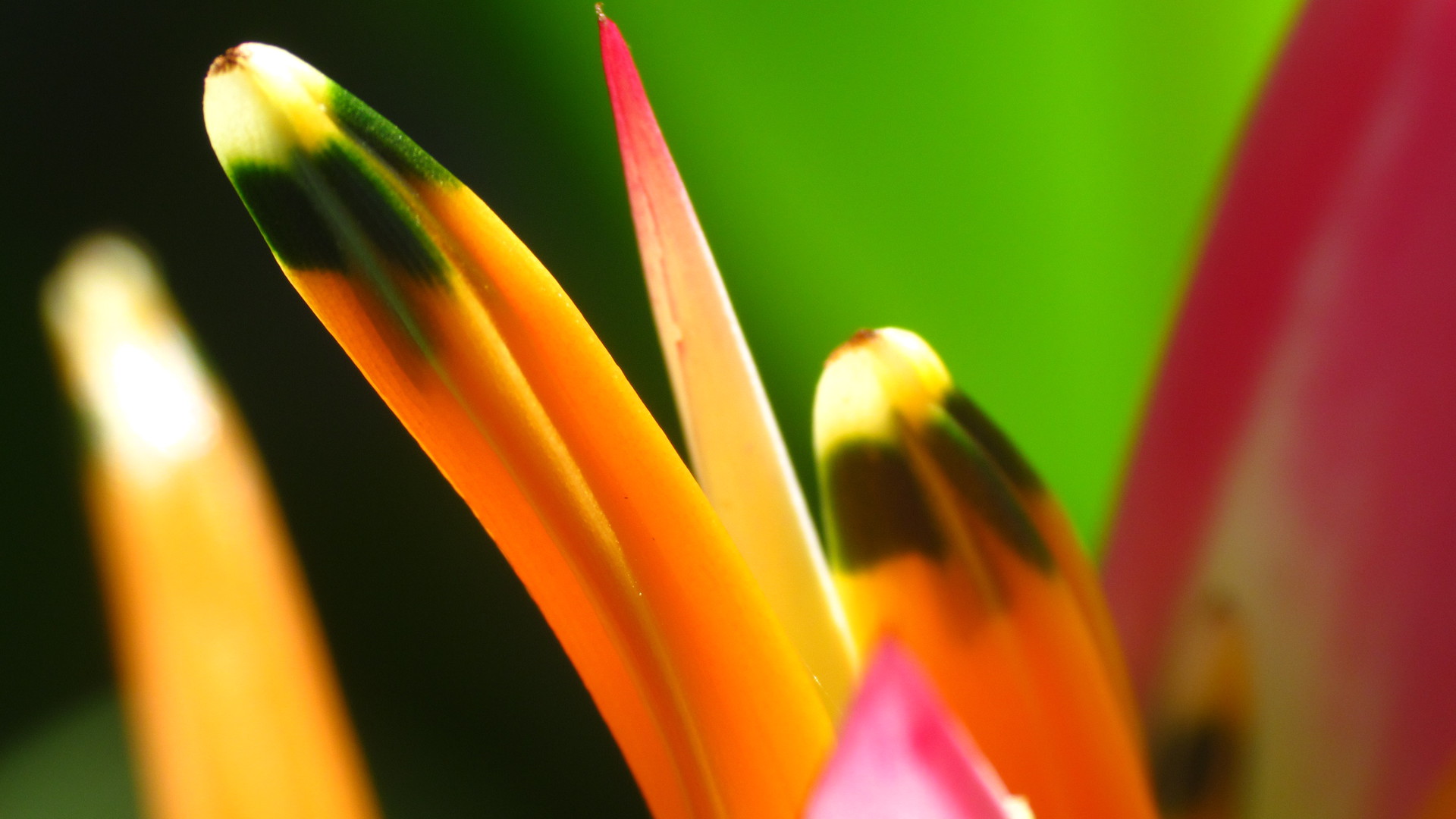
The Heliconiaceae family of plants is characterised by a large variety of astonishingly beautiful flowers of improbable shapes. The False Bird of Paradise (Heliconia psittacorum) is no exception. Also known as Parakeet Flower, Parrot’s Beak or Parrot’s Flower, this popular perennial originating from Central and South America provides a striking combination of colours – from its lovely pink bracts to strong orange-coloured flowers with dark green spots and white tips. It is widely cultivated in many parts of the tropics, often as hybrids or in colour varieties that differ considerably from the “original”, but still remain highly impressive.
Heliconias are easy to grow, but from my experience they take a long time (at least a year) before they become established and start producing these magnificent flowers. I planted the ones on the photographs more than two years ago, but this is the first occurrence of three flowers in bloom at the same time. Also, their long slender stems are vulnerable and easily broken by strong winds and I remember my disappointment of the very first of these flowers falling victim to a strong typhoon. Interestingly, I planted it at the same time and in the same place as a Heliconia psittacorum variety called “Golden Torch” which has been so much more successful – sometimes giving ten or more blooms at a time, especially during the warmer months.
(This page has been viewed 987 times.)