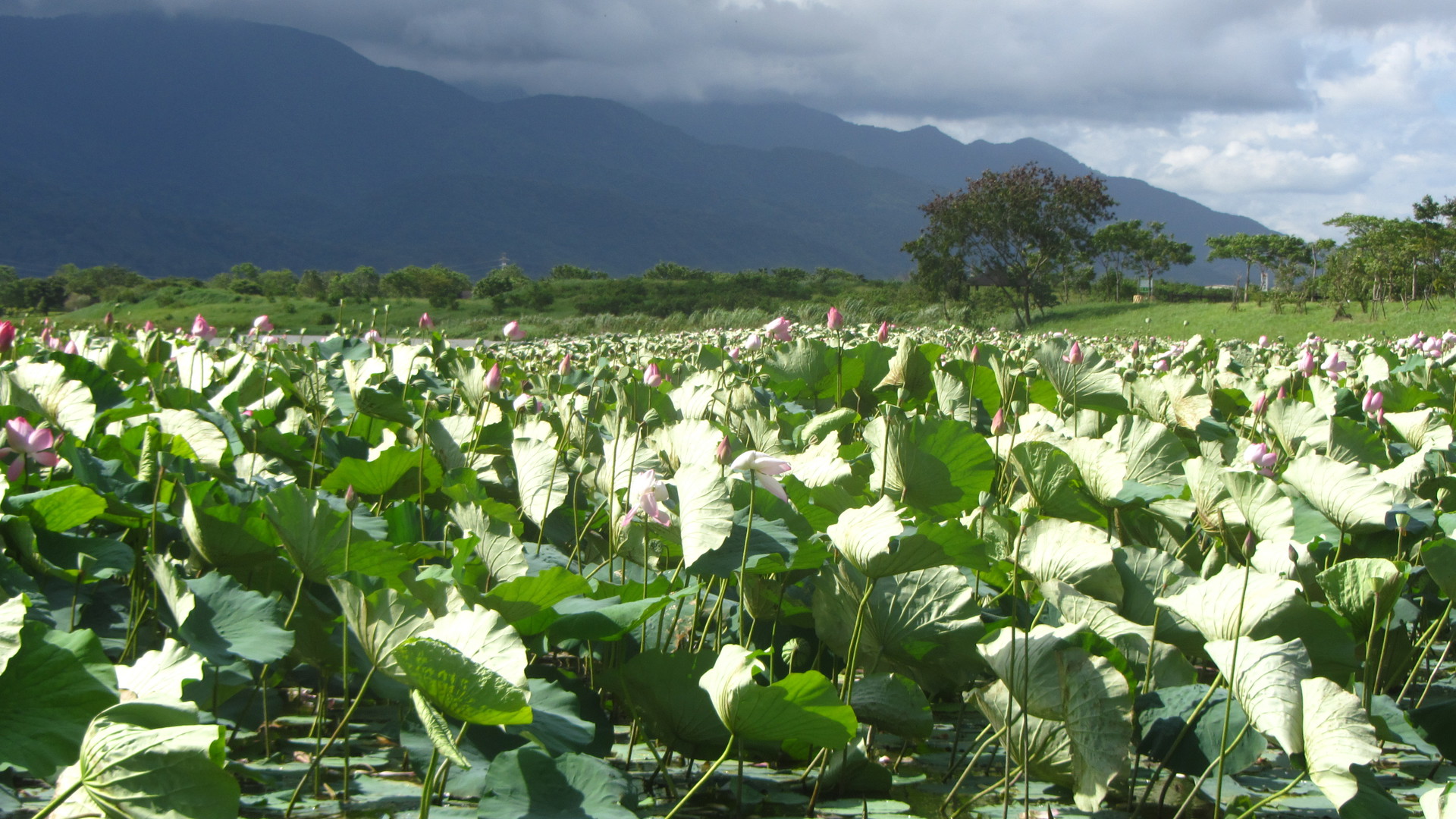
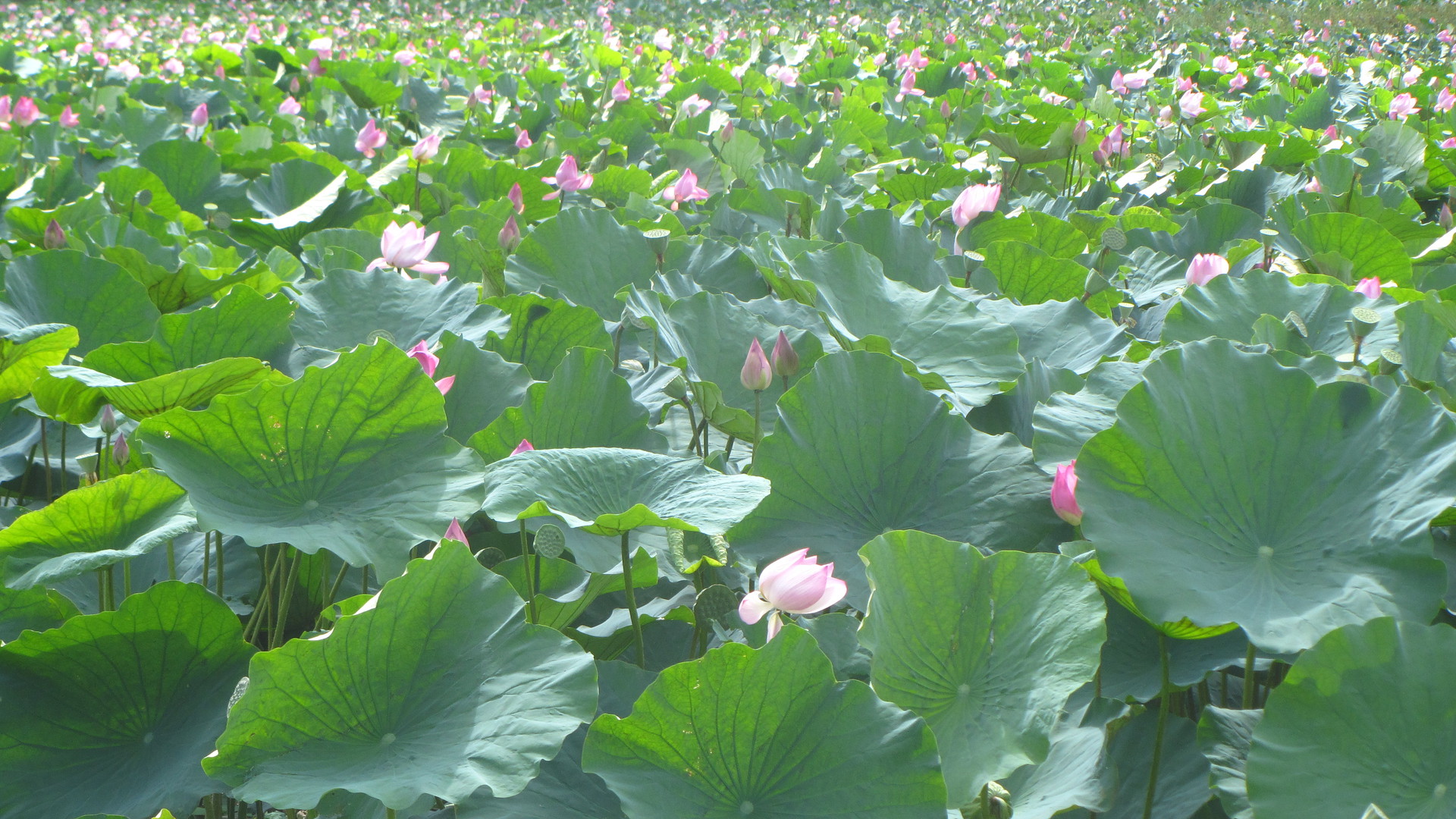
We came across this lovely scene last weekend near the town of Chishang (池上) in Taitung County, southern Taiwan. Much of the small lake, which goes under the name of Dapo, was covered by a large colony of blooming Indian lotus flowers (Nelumbo nucifera). Despite its common name, this is a plant native to Taiwan, as well as many tropical regions of Australasia, all the way south to Queensland. The large pink flowers combined with even larger round leaves were a sight to behold, especially when pictured with the rising mountains in the northwest. It was a hot summer day, but the strong breeze made it more bearable, even though the wind also damaged the fragile flowers and kept “folding” many of the leaves. The hundreds of fluttering butterflies on the banks of the lake made the scene even more dreamy and surreal.
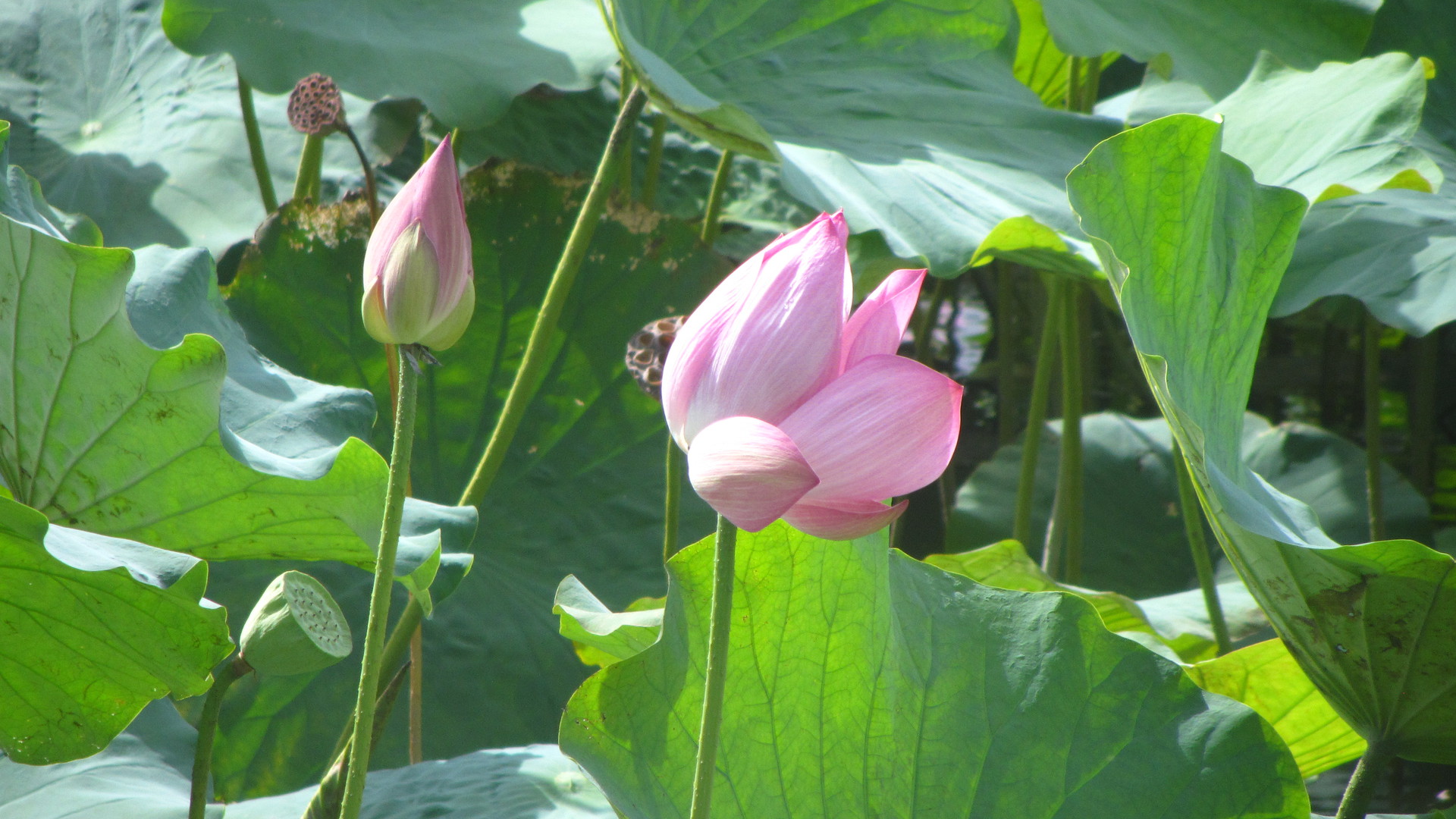
The lotus is a popular plant to grow in fish ponds and other water bodies and it’s farily easy to propagate by dividing the rhizomes. The showy flower can have up to 20 centimetres in diameter and the round leaves can easily be up to 60 centimetres wide. The plant grows to a height of around 1 – 1.5 metres. There are two unusual characteristics of the species. The first one is the ability of the flower to regulate and maintain a constant temperature (around 30 – 35 °C) even if the temperature of the surrounding air drops significantly. The second interesting aspect of the Indian lotus is its enormous longevity – apparently an individual plant can live as long as a thousand years!
(This page has been viewed 469 times.)