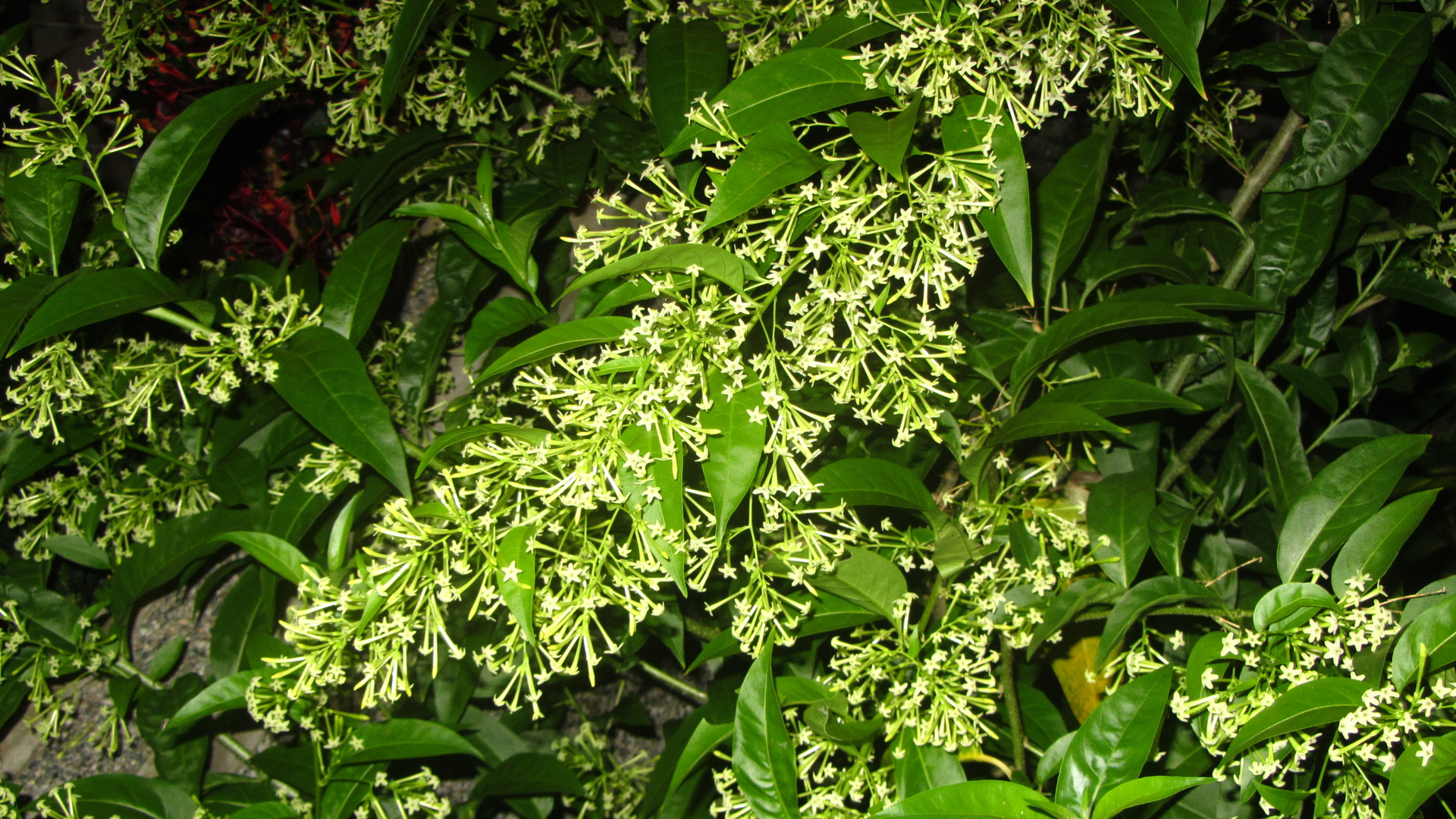
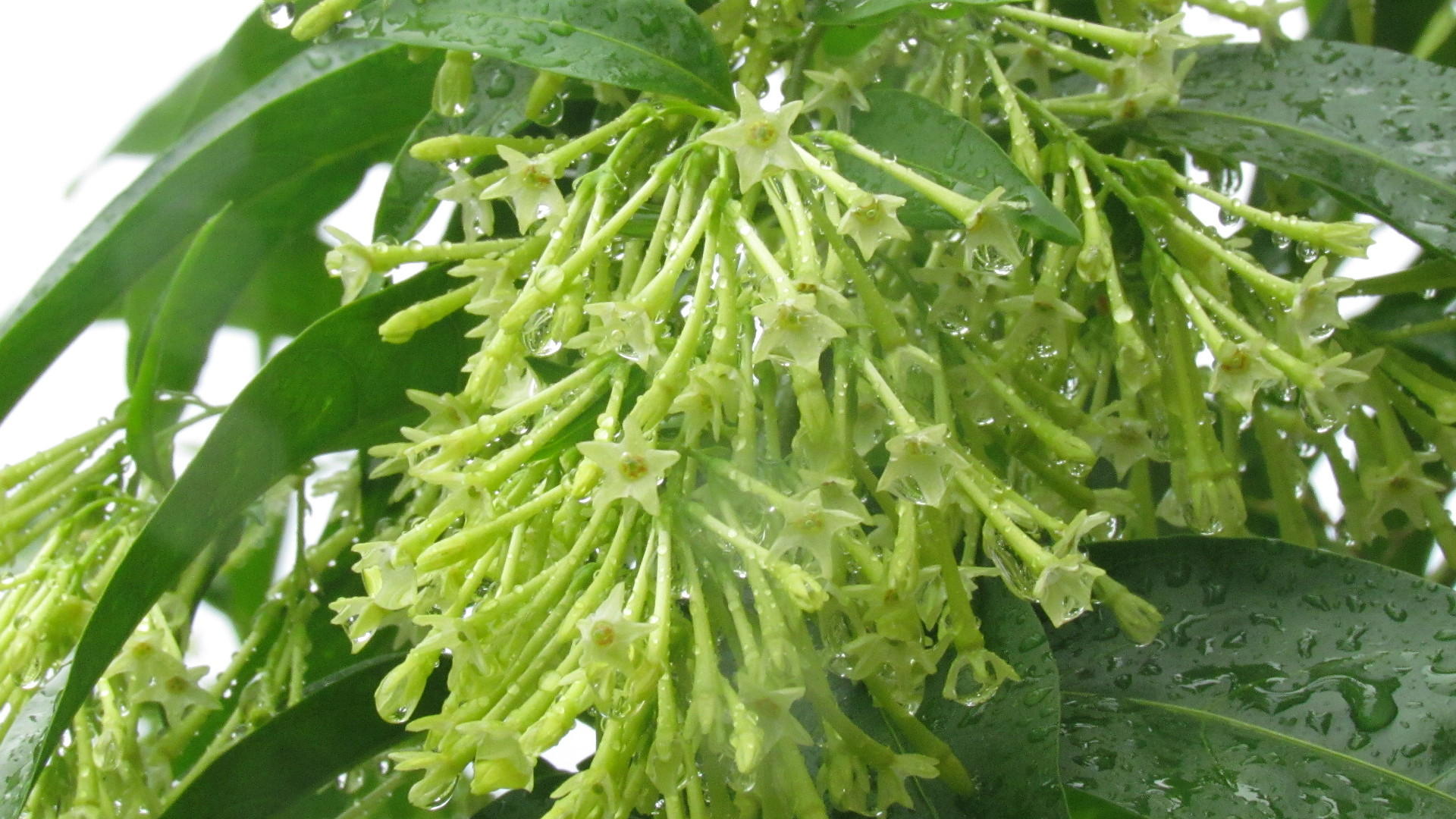
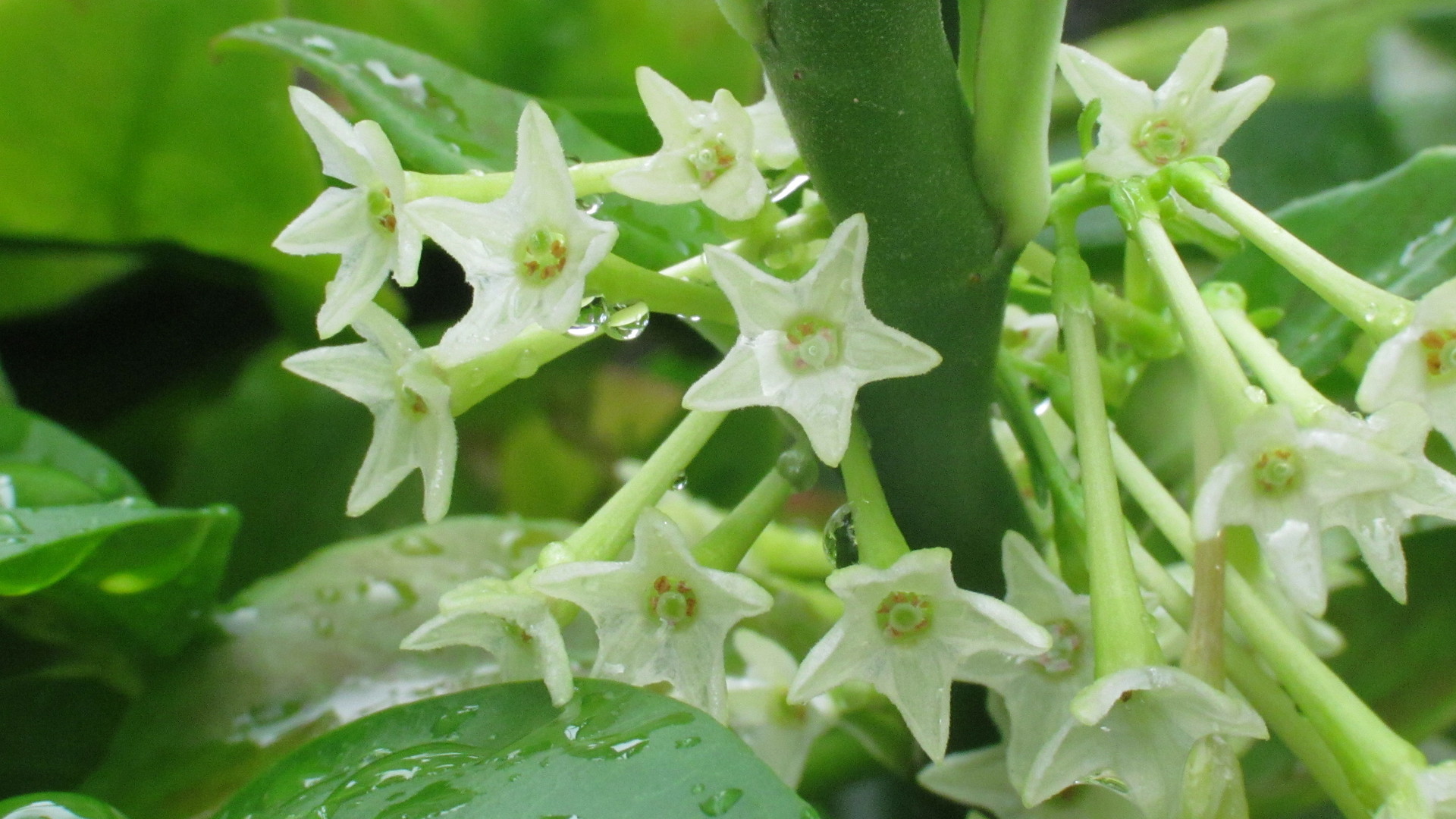
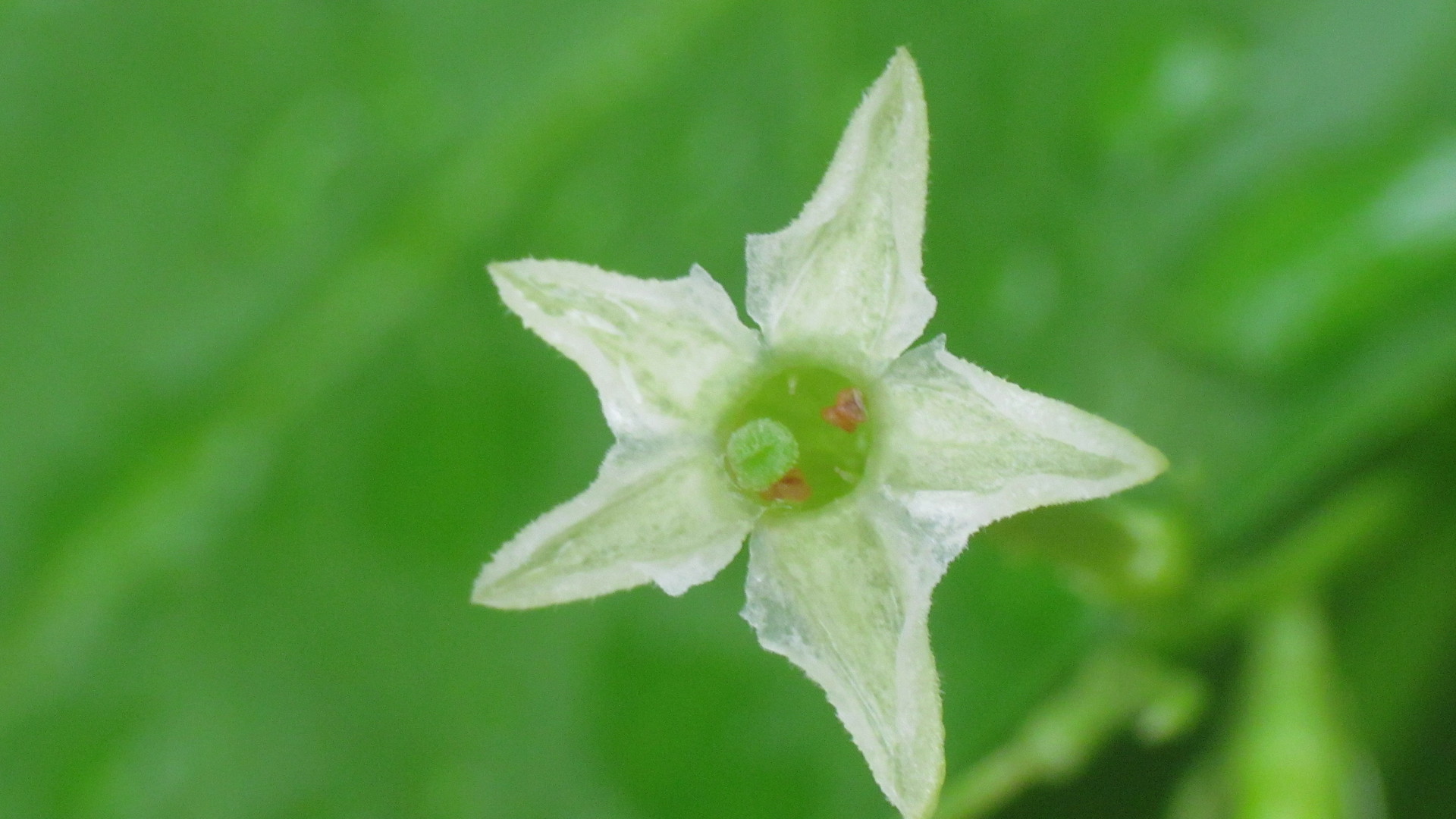
A rather ordinary plant, the night-blooming jessamine (Cestrum nocturnum) is widely cultivated in southern Taiwan. I always wondered what makes it so popular until I saw it (and especially smelt it!) under a moonlight. Its thousands of small white flowers gave an eerie feeling of fluorescence while the blossom’s strong sweet scent further enhanced the pleasure of alighting upon this spectacular specimen of the tropics. The most unusual thing about the species is the fact that it releases the perfume only at night, obviously preferring to attract nocturnal insects while relying on visual allure during day time. The Chinese around here call the plant 夜來香 (yelaixiang), a beautifully descriptive name which loosely translates as “fragrance that comes at night”.
The night-blooming jessamine is a native of the Caribbean. It blooms several times a year, usually in 2 – 3 months intervals during spring and summer, slightly less frequently in cooler months. Its branches grow at a dramatic speed; I tend to trim them after each bloom (otherwise they would quickly dominate their part of the garden), but they are back at their previous lengths within a few short weeks. They are treated as an invasive species in some parts of the world. I have yet to see any fruit though; they are supposed to produce small aubergine-coloured berries, but perhaps my agressive trimming makes the shrub reluctant to grow them.
The previous owners of our house planted the shrub near a swing chair – a rather pleasant and, at times, an intoxicating place to spend a relaxing tropical evening…
(This page has been viewed 704 times.)