One of the less pleasant aspects of living on islands or in the coastal areas of climatically warmer zones is the threat of devastating tropical storms. These are usually referred to as typhoons, hurricanes, tropical depressions or cyclones, depending on the geographical location where they occur, but they are essentially the same thing – vast thunderstorms with sustained winds of at least 119 kilometres per hour and an “eye” of relative calm in the centre of it, clearly visible on satellite pictures. Many scientific studies have been published on the formation and subsequent movements of these storms, but suffice to say that they usually form close to the equator and often do not intensify enough until they are around 10 degrees north or south from it. As a result, people living on or close to the equator (e.g. Singapore) will never experience these damaging storms, while those further afield, even in the climatically milder zone (e.g Tokyo in Japan) will feel the devastating effect from time to time.
Taiwan generally gets several typhoons each year, mostly between July and October. The first one of this year’s typhoon season hit the island yesterday; Soulik, as the storm is called, was at first classified as “super typhoon”, but it was later downgraded as its intensity dropped somewhat when the eye approached northern Taiwan. Here in the southern part of the island we only started feeling the effect around midnight, but the winds, once they arrived, were incredibly thunderous and it was impossible to sleep. The storm has been moving at a speed of 25 kilometres per hour, which is rather fast, and the centre of it already left the island by mid-morning today, heading towards China. There is still some rain and thunders, but the winds have calmed down considerably in Taitung.
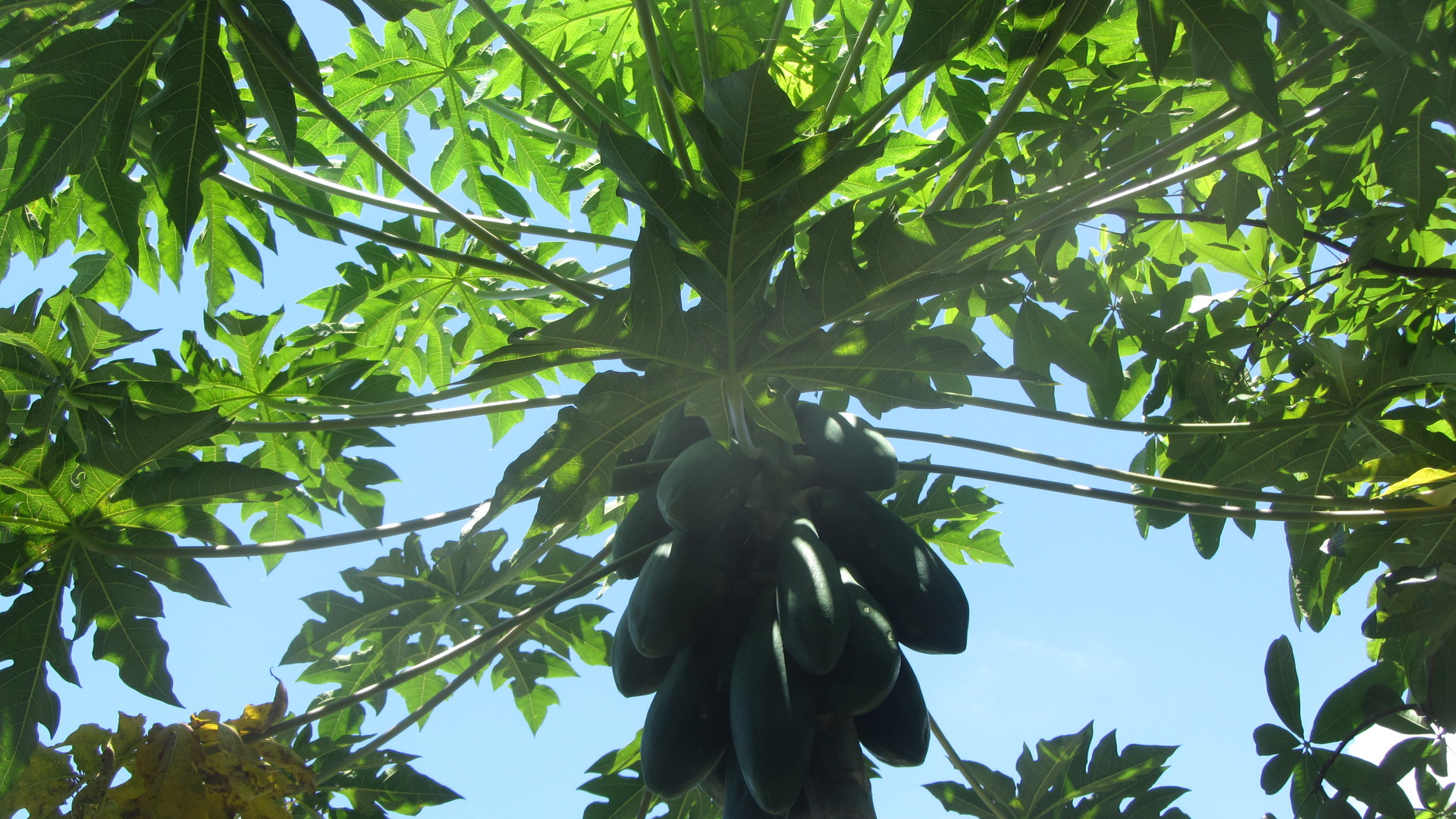
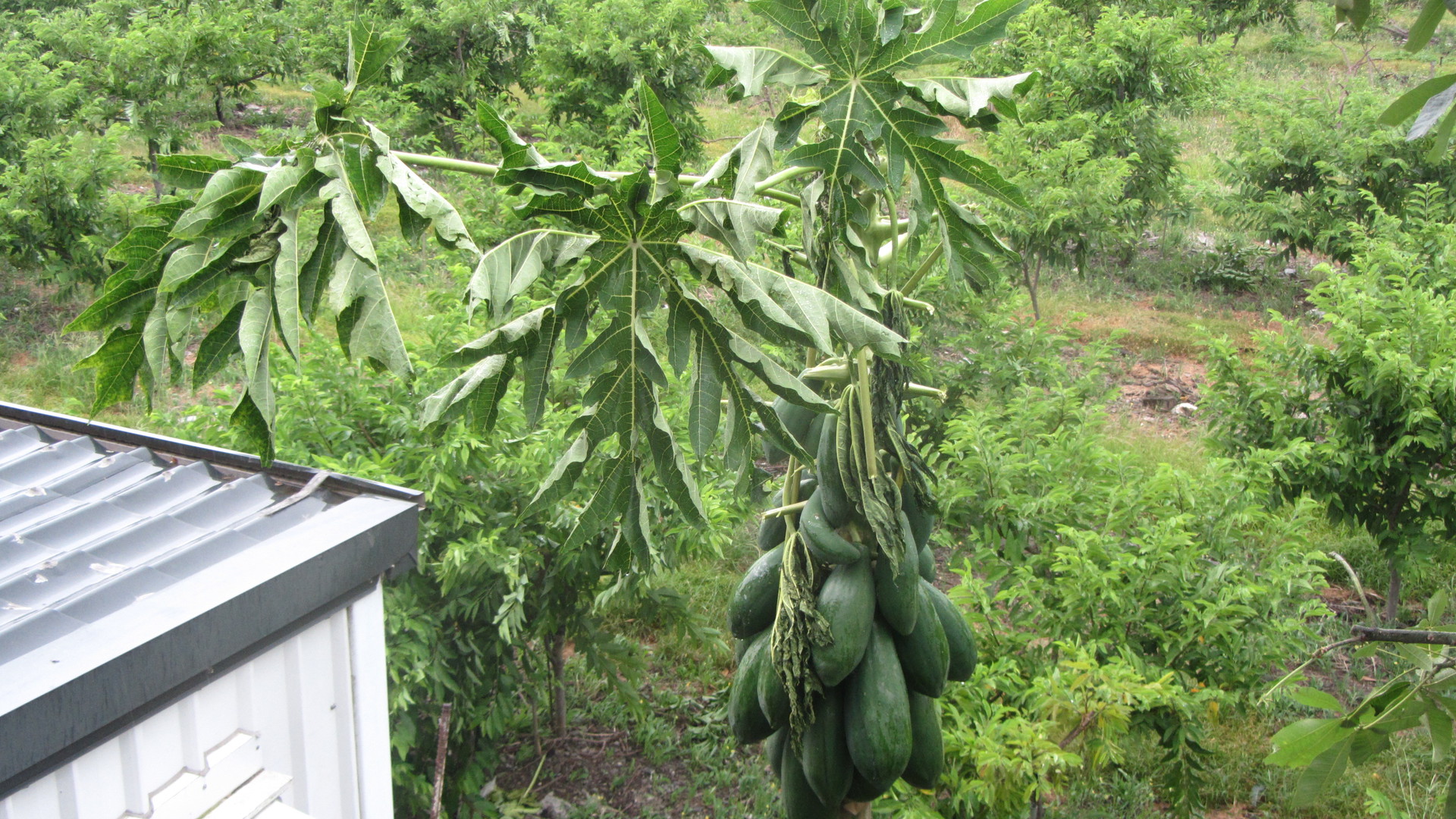
Unfortunately, those six hours of gale-force winds have left scenes of destructions around us. Fallen trees, broken plants, roads and farms covered by wet leaves… To get an idea what it was like, take a look at the pictures below. The first one is a photo of our lovely and healthy papaya tree as photographed about two weeks ago, while the second and third pictures are from this morning. It took just six hours of strong winds to destroy just about all its leaves, even though most of the fruits are still bravely hanging on…
Before typhoon:
After typhoon:

Still, in spite of all the destruction caused by this powerful natural phenomenon, there was something that put smiles back on our faces this morning – a bag full of home-grown vegetables placed near the main gate, from one of our kind neighbours. Typhoons tend to have a drastically negative effect on fresh produce, both in terms of supply (or lack, thereof) and prices. So despite all the devastation, it feels great to know that people around us care and that we are still going to have great-tasting fresh vegetables for lunch… 🙂
(This page has been viewed 323 times.)