The Red Ring Skirt (Hestina assimilis) is a species of butterfly in the family nymphalidae, commonly found in Asia (from northern Vietnam to southern and eastern China as well as the Korean peninsula, Taiwan and southern Japan). Fairly large, with its wing span of 60 – 80 millimetres, it is an attractive insect that often feeds on the ground, looking for fallen decomposing fruit or a source of moisture. The larvae are commonly found on top of the leaves of the Chinese hackberry tree (Celtis sinensis), taking about three weeks to mature. The adult butterfly emerges from the pupa after 1 – 1.5 weeks and its life span is reportedly around 2 – 3 months. It is territorial and is often found around human habitations, as well as forests up to 1,500 metres above sea level.
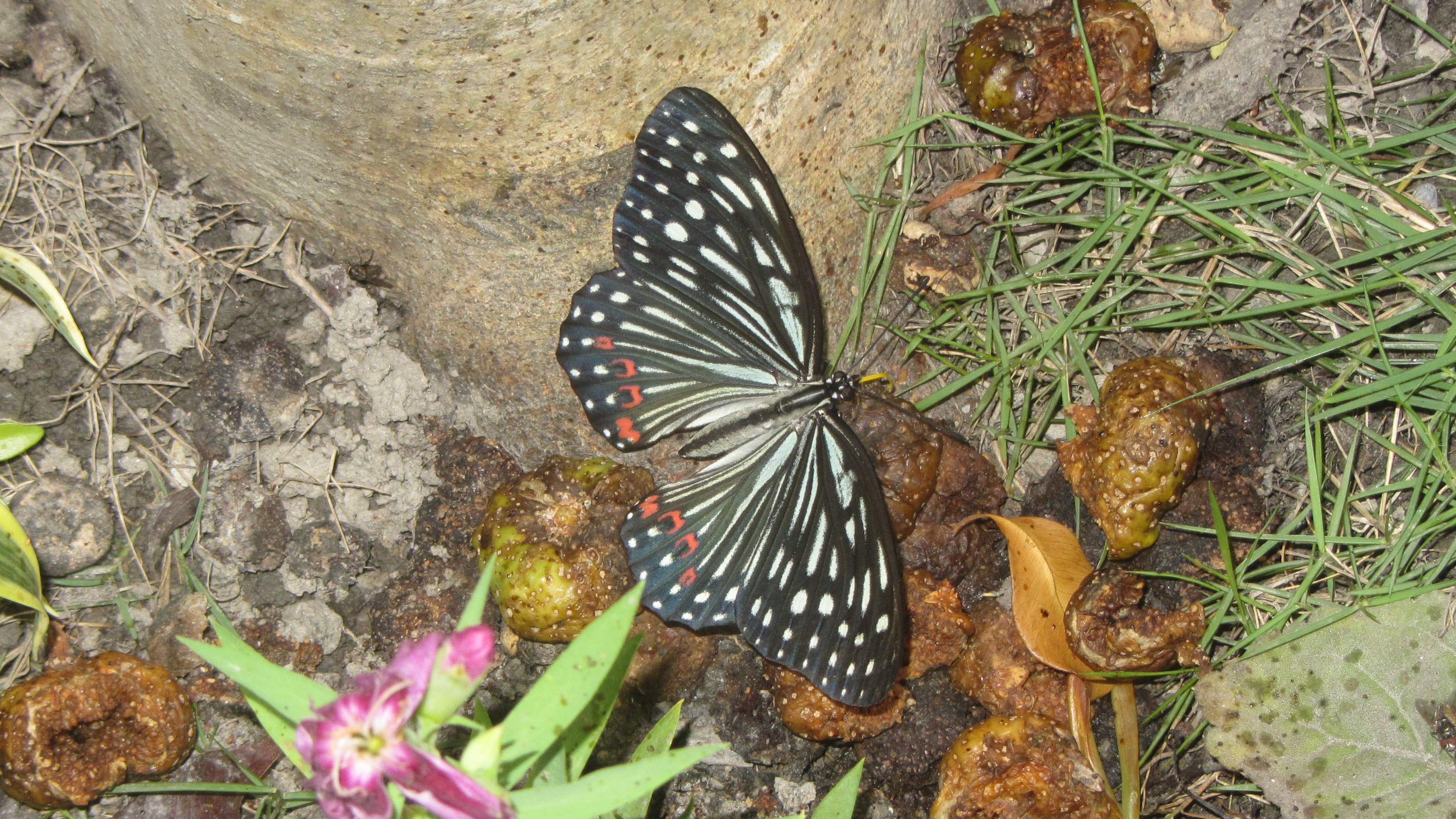
Butterflies are notoriously hard to photograph, but this particular one, a formosana subspecies, got attracted by the fallen, half-rotten figs on the ground where it spent a fair amount of time sucking the sweet juices from the fruit. If you enlarge the picture you will notice a surprisingly long yellow tube, or proboscis, that the insect extends from its mouth to suck in juice and nectar. This butterfly is so attractive largely because of the eye-catching pattern of red spots on the lower parts of its wings. In fact, both the English and Chinese common names include the word “red”; in Chinese it is called 紅星斑蛺蝶 which literally translates as “red star spot butterfly”.
(This page has been viewed 383 times.)