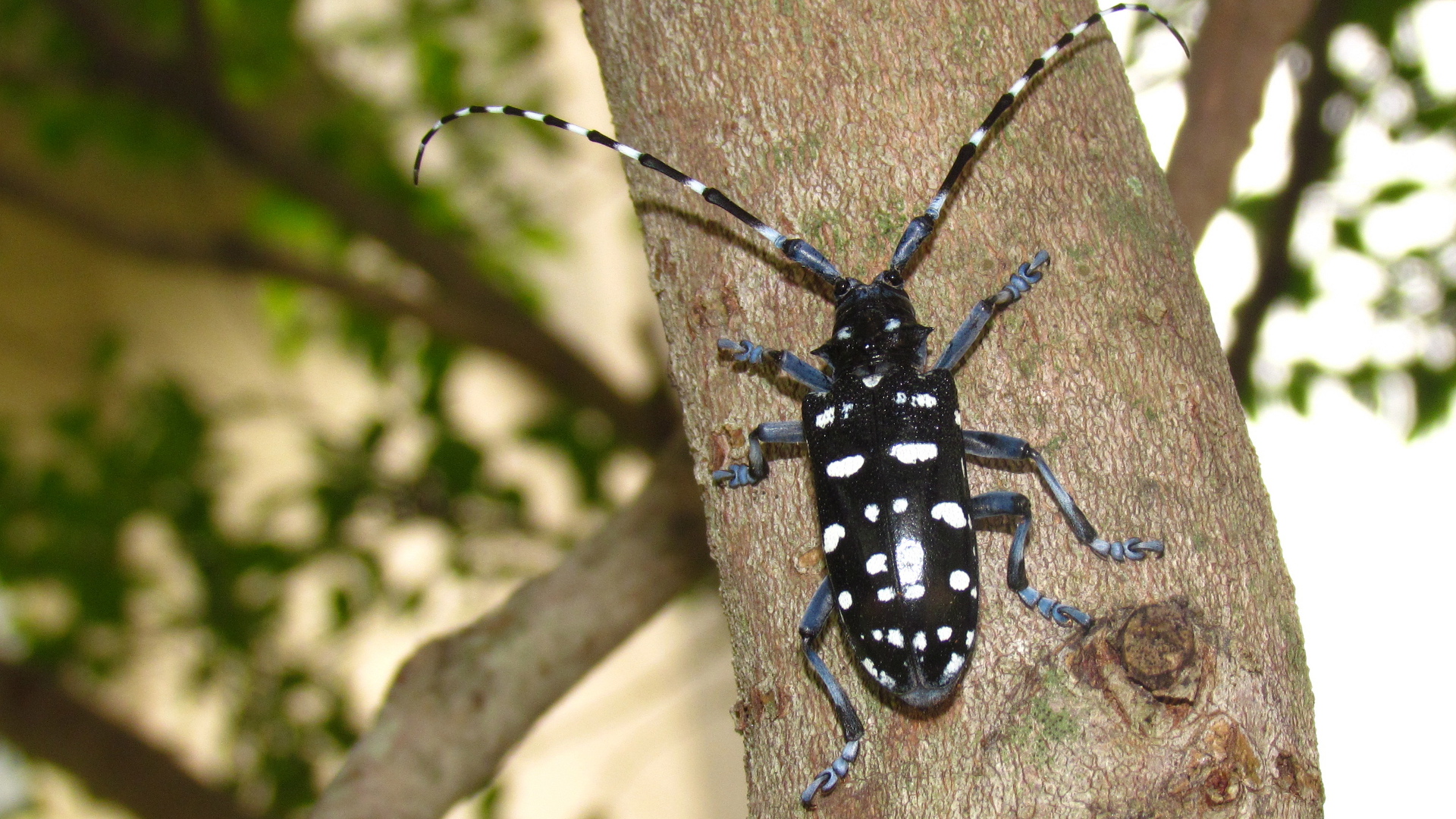
Asian Long-horned Beetle (Anoplophora glabripennis) is a spectacular insect, at least in terms of appearance. Its enormous antennae in alternating black and white colours are perhaps the most fascinating – without them it would look fairly ordinary. This is only the second time I spotted this insect in the garden; luckily this time it gave me enough time to get the camera and take some photos before it climbed up the tree and disappeared. The reason for it being so rare is the fact that, although it takes it two years to mature, its adult life then only lasts a couple of months.
Beautiful as these insects are, there is a rather sinister side to these creatures – their larvae can destroy even large and otherwise healthy trees. Native to east Asia, the larvae have been accidentally introduced to Europe and North America in wooden crates and pallets used for shipping goods across the globe. In fact, eradication programs were implemented in several parts of world after these insects had destroyed fruit trees in the USA, Canada, Austria, Italy and other countries.
(This page has been viewed 680 times.)

The image you have for Anoplophora glabripennis is actually Anoplophora chinensis – the citrus longhorned beetle.