The bulbul nest is now empty. It was a sad end of a rather exciting week which provided us with a rare opportunity to witness the arrival of new life – in the form of four helpless, naked and blind baby birds, totally dependent on their parents to bring them to adulthood. It wasn’t meant to be. As I watched the distressed bulbul mother arrive at her empty nest for the last time, realising that all that herculean effort she had put into bringing up her four offsprings came to nothing, I felt like crying. And yet, this is how things happen in nature all the time – somebody has to die for others to live on. It’s a cruel and delicate balance that keeps the world’s ecosystem alive and (arguably) well.
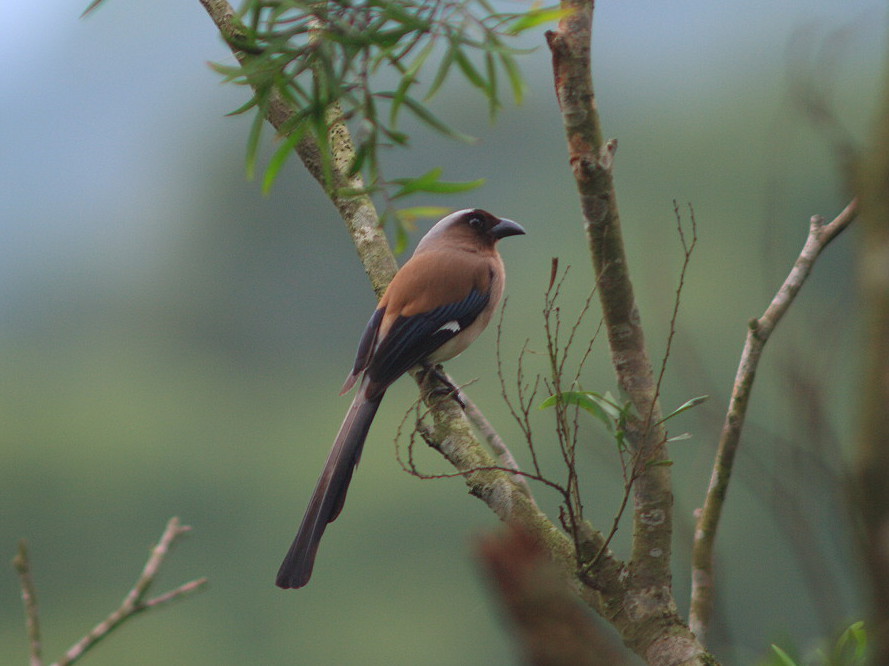
Today I was able to spot the heartless baby snatcher that has been causing so much heartbreak to the bulbul parents since yesterday. The Grey Treepie (Dendrocitta formosae), or more precisely its Taiwan cousin, an endemic subscpecies dendrocitta formosae formosae, likely accounted for all four of the victims. A member of the Corvidae family, it’s a large bird reaching 34 centimetres so the much smaller bulbuls had no chance of defending their nest against the powerful intruder. I did intervene on one occasion, but once the large bird discovered the the nest, it was only a matter of time before it emptied it – the several heavy palm leaves I placed above the nest made little difference. The linked Wikipedia article confirms that this Treepie is an omnivore, often feeding on nestlings.
I hope to take a good photo of the Grey Treepie in the coming days (although I haven’t seen these birds around very often). In the meantime I’ve “borrowed” the one below from Wikimedia.
(This page has been viewed 415 times.)